Projects
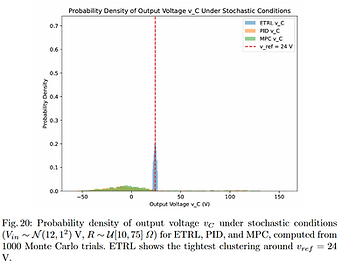
Event-Triggered Reinforcement Learning for Adaptive Boost Converter Control
To reduce unnecessary control computation and improve adaptability in real-time converter systems, this project introduced a sparse RL-based controller integrated with a digital twin and event-triggered logic for boost converter applications.
🔹 𝗘𝘃𝗲𝗻𝘁-𝗧𝗿𝗶𝗴𝗴𝗲𝗿𝗲𝗱 𝗥𝗟 𝗖𝗼𝗻𝘁𝗿𝗼𝗹𝗹𝗲𝗿
* Updates the control policy only during significant voltage deviations
* Reduces computational load by ~70% compared to continuous RL
* Enables real-time control on low-cost microcontrollers
🔹 𝗗𝗶𝗴𝗶𝘁𝗮𝗹 𝗧𝘄𝗶𝗻-𝗕𝗮𝘀𝗲𝗱 𝗩𝗮𝗹𝗶𝗱𝗮𝘁𝗶𝗼𝗻
* Created in Python (NumPy, SciPy, PyTorch)
* Simulates boost converter dynamics with time-varying Vin and load R
* Used Proximal Policy Optimization (PPO) with event triggers for training
🔹 𝗥𝗲𝗮𝗹-𝗪𝗼𝗿𝗹𝗱 𝗜𝗺𝗽𝗮𝗰𝘁
This model-free control strategy showed stable performance, fast learning convergence, and high tracking accuracy—ideal for renewable systems, battery interfaces, and embedded power controllers with computation constraints.


Hybrid Sine Cosine Algorithm with Pattern Search for MPPT in PV Systems
This project developed a hybrid SCA-PS (Sine Cosine Algorithm + Pattern Search) technique to optimize Maximum Power Point Tracking (MPPT) in photovoltaic (PV) systems, particularly under partial shading and variable irradiance.
🔹 𝗜𝗻𝗻𝗼𝘃𝗮𝘁𝗶𝘃𝗲 𝗛𝘆𝗯𝗿𝗶𝗱 𝗠𝗲𝘁𝗮𝗵𝗲𝘂𝗿𝗶𝘀𝘁𝗶𝗰
* SCA ensures broad global exploration
* Pattern Search offers precise local convergence
* Dynamically adjusts duty cycle in real-time to maximize PV output
🔹 𝗧𝗲𝗰𝗵𝗻𝗶𝗰𝗮𝗹 𝗔𝗱𝘃𝗮𝗻𝘁𝗮𝗴𝗲𝘀
* Overcomes drawbacks of P&O (oscillation, local maxima)
* Higher convergence speed, power extraction, and tracking accuracy
* Handles multiple peaks under partial shading with a Gaussian-based shading model
🔹 𝗩𝗮𝗹𝗶𝗱𝗮𝘁𝗶𝗼𝗻 & 𝗜𝗺𝗽𝗮𝗰𝘁
Implemented in Python (NumPy + Matplotlib) and validated with real-time P-V and V-I curve simulations.
SCA-PS exhibited significantly better energy yield than P&O and conventional metaheuristics, making it a viable solution for residential, commercial, and off-grid solar systems.


Transient Adaptive Predictive Fuzzy Reinforcement (TAPFR) Controller for Buck Converters
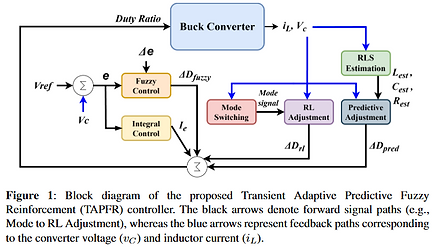
This project proposed a next-generation controller tailored for buck converters by integrating four distinct strategies—predictive control, fuzzy logic, reinforcement learning, and adaptive estimation—into one hybrid control architecture.
🔹 𝗡𝗼𝘃𝗲𝗹 𝗔𝗽𝗽𝗿𝗼𝗮𝗰𝗵
Unlike traditional PID and sliding mode controllers, the TAPFR controller offers fast transient response, adaptability, and robustness by combining:
* Recursive Least Squares for online parameter estimation
* Fuzzy logic for handling nonlinearities
* Reinforcement Learning (Q-learning) for online policy adjustment
* Predictive voltage error compensation for foresight-based control
🔹 𝗔𝗱𝘃𝗮𝗻𝗰𝗲𝗱 𝗙𝗲𝗮𝘁𝘂𝗿𝗲𝘀
* Soft-start mechanism to prevent inrush currents
* Mode switching between high-efficiency and high-transient modes
* Anti-windup integral control to eliminate steady-state error
* Adaptive fuzzy rule sets with voltage damping and predictive enhancements
🔹 𝗥𝗲𝘀𝘂𝗹𝘁𝘀 & 𝗜𝗺𝗽𝗮𝗰𝘁
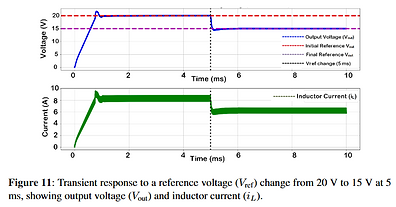
MATLAB simulations showed tight voltage regulation, low overshoot, and resilience to dynamic load and parameter changes.
This control framework is applicable to EVs, renewable systems, and portable electronics requiring intelligent and adaptive voltage regulation.


Design and Development of Integrated Dual Output Converter with Model Predictive Control for Solar Pumping Applications
(M. Tech Thesis Phase 2)
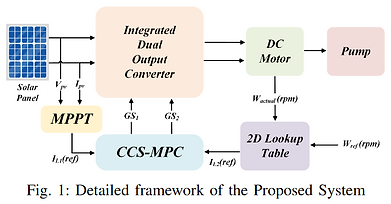
This project presents an Integrated Dual Output Converter (IDOC) controlled via a Continuous Control Set Model Predictive Control (CCS-MPC) strategy to enhance solar-powered water pumping.
🔹 𝗜𝗡𝗡𝗢𝗩𝗔𝗧𝗜𝗩𝗘 𝗧𝗢𝗣𝗢𝗟𝗢𝗚𝗬
The non-isolated SIMO DC-DC converter delivers both boost and buck outputs from one input, reducing hardware, improving cost-efficiency, and enhancing coordination across loads.
🔹 𝗔𝗗𝗩𝗔𝗡𝗖𝗘𝗗 𝗖𝗢𝗡𝗧𝗥𝗢𝗟 𝗦𝗧𝗥𝗔𝗧𝗘𝗚𝗬
CCS-MPC directly regulates inductor currents, enabling fast dynamic response. Ramp compensation removes subharmonic oscillations at high duty ratios, while automatic mode switching ensures seamless performance under varying load and solar conditions.
🔹 𝗦𝗢𝗟𝗔𝗥 𝗜𝗡𝗧𝗘𝗚𝗥𝗔𝗧𝗜𝗢𝗡 & 𝗠𝗢𝗧𝗢𝗥 𝗖𝗢𝗡𝗧𝗥𝗢𝗟
The converter powers a separately excited DC motor from a solar PV array. A Perturb & Observe MPPT algorithm maximizes PV output, while a LUT-based speed controller ensures efficient, tuneless motor control.
🔹 𝗗𝗜𝗚𝗜𝗧𝗔𝗟 𝗜𝗠𝗣𝗟𝗘𝗠𝗘𝗡𝗧𝗔𝗧𝗜𝗢𝗡
Implemented on TI’s TMS320F28379D DSP using Code Composer Studio. Real-time PWM, ADC, and control execution were verified through oscilloscope traces.
🔹 𝗥𝗘𝗦𝗨𝗟𝗧𝗦 & 𝗩𝗔𝗟𝗜𝗗𝗔𝗧𝗜𝗢𝗡
Simulations and hardware tests confirm fast current tracking, accurate voltage control, and reliable operation under fluctuating irradiance and load.
𝗜𝗺𝗽𝗮𝗰𝘁:
A scalable, cost-effective, and robust solution for clean water access via solar-powered systems in rural and off-grid areas.


Design and Implementation of a Model Predictive Controller for Enhanced Performance of a SIMO DC-DC Converter. (M. Tech Thesis Phase 1)
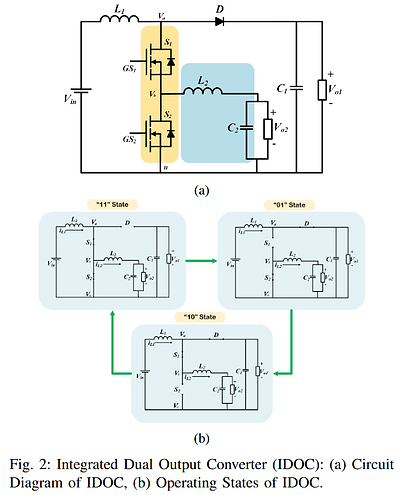
This project involved developing a Model Predictive Control (MPC) strategy to improve the performance of a Single Input Multiple Output (SIMO) DC-DC converter, specifically an Integrated Dual Output Converter (IDOC). Conventional controllers like PID and Peak Current Mode Control (PCMC) struggle with nonlinear loads, dynamic transients, and subharmonic oscillations.
To overcome these limitations, I implemented a Continuous Control Set MPC (CCS-MPC) for both boost and buck outputs, enabling seamless mode transitions and dynamic adaptability.
🔹 𝗖𝗼𝗻𝘃𝗲𝗿𝘁𝗲𝗿 𝗔𝗿𝗰𝗵𝗶𝘁𝗲𝗰𝘁𝘂𝗿𝗲: Designed a novel IDOC topology with reduced components, enhanced reliability, and improved power flow coordination.
🔹 𝗠𝗣𝗖 𝗔𝗹𝗴𝗼𝗿𝗶𝘁𝗵𝗺: Real-time current tracking using optimized cost functions across two distinct operating modes.
🔹 𝗥𝗮𝗺𝗽 𝗖𝗼𝗺𝗽𝗲𝗻𝘀𝗮𝘁𝗶𝗼𝗻: Addressed subharmonic oscillations (D > 0.5) to improve system stability.
🔹 𝗣𝗪𝗠 𝗟𝗼𝗴𝗶𝗰: Modified switching scheme from 11-10-00 to 11-01-10 to reduce voltage stress and ensure smooth transitions.
🔹 𝗛𝗮𝗿𝗱𝘄𝗮𝗿𝗲 𝗥𝗲𝗮𝗹𝗶𝘇𝗮𝘁𝗶𝗼𝗻: Deployed on TI TMS320F28379D DSP using Code Composer Studio, generating PWM and handling ADC via GPIO.
🔹 𝗦𝗶𝗺𝘂𝗹𝗮𝘁𝗶𝗼𝗻 𝗩𝗲𝗿𝗶𝗳𝗶𝗰𝗮𝘁𝗶𝗼𝗻: MATLAB/Simulink results validated fast transient response, better overshoot control, and improved efficiency over traditional schemes.
This work demonstrates the capability of MPC in modern power converters—paving the way for reliable control in EVs, renewable systems, and advanced power platforms.


Design and Simulation of a Distance Protection Scheme using Mho Relay
As part of my Power System Protection coursework, I developed a complete digital distance protection scheme using a Mho relay for a transmission line between buses 7 and 8. The project involved modeling, MATLAB programming, and real-time simulation in Simulink to design the relay, validate fault detection across various scenarios, and assess system behavior under dynamic conditions.
Key highlights:
1) Designed a three-zone Mho relay with different reach settings and time delays based on impedance characteristics.
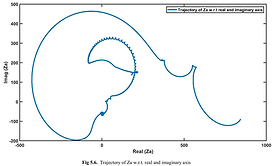
2) Simulated and validated relay operation for a wide range of faults: LG, LL, LLG, and LLL, ensuring accurate zone-wise tripping based on R-X characteristics.
3) Loadability limits were analyzed theoretically and simulated to prevent maloperation under heavy loading. Demonstrated improvement in load margin by varying Maximum Torque Angle (MTA).
4) Simulated power swing conditions to evaluate relay stability, ensuring no unintended tripping during stable system oscillations.
5) Applied Thevenin’s theorem to derive a two-machine equivalent network from test data, calculating system impedances and internal EMFs.
This project sharpened my skills in digital relay design, MATLAB/Simulink modeling, and fault analysis, providing a strong foundation in modern protective relaying strategies.


Hybrid Converter System for Renewable Energy Systems
Designed and validated a hybrid renewable energy system for microgrid applications, integrating solar, wind, and Li-ion battery sources for sustainable and reliable energy delivery.
🔹 𝗠𝘂𝗹𝘁𝗶-𝗜𝗻𝗽𝘂𝘁 𝗖𝗼𝗻𝘃𝗲𝗿𝘁𝗲𝗿: Developed a converter to manage power from multiple sources, ensuring continuous and balanced energy supply.
🔹 𝗠𝗼𝗱𝘂𝗹𝗮𝗿 𝗢𝗽𝗲𝗿𝗮𝘁𝗶𝗼𝗻: Incorporated a modular switch design to support flexible and reconfigurable operating modes.
🔹 𝗦𝘁𝗮𝘁𝗲 𝗼𝗳 𝗖𝗵𝗮𝗿𝗴𝗲 (𝗦𝗢𝗖) 𝗖𝗼𝗻𝘁𝗿𝗼𝗹: Implemented SOC management algorithms for optimal battery health, performance, and lifecycle.
🔹 𝗦𝗶𝗺𝘂𝗹𝗮𝘁𝗶𝗼𝗻 & 𝗩𝗮𝗹𝗶𝗱𝗮𝘁𝗶𝗼𝗻: System was modeled and verified in MATLAB Simulink and PSIM, confirming effective SOC maintenance and system reliability under dynamic source conditions.
𝗜𝗺𝗽𝗮𝗰𝘁: Demonstrated a scalable and energy-efficient hybrid system design for off-grid and remote renewable microgrids.


